Untold, development assistance, anecdotes from Lashkar Gah - Helmand Province: Southern Afghanistan
 |
| Disputed territory, towns, borders and key installations in southern Afghanistan Courtesy of the Independent newspaper |
 |
| Design team members, representing UNDP and DANIDA, on arrival in Lashkar Gah in 2013 |
- Stabilisation (peace and security) approaches are likely to continue to present challenges to the aid community’s ability to act according to humanitarian principles in fragile and conflict affected states (FCAS), and post-conflict environments. Experiences in Afghanistan highlight significant tension, if not outright conflict, between stabilisation and internationally recognised guidelines and principles governing civil–military collaboration.
- Civil–military engagement was noticeably more effective when it was entrenched in International Humanitarian Law and logical reasoning, as with advocacy focused on reducing or 'doing no-harm' to civilians.
- Aid agencies need to invest more in capacity and training for engaging in civil–military dialogue and, together with donors, seek to generate more objective evidence on the impact of stabilisation approaches.
 |
| Signs of those Times - Senior Provincial Government officials - Helmand |
 |
| Lashkar Gah - location of the PRT - a variable 'oasis' tendered by Helmandi's with green fingers |
 |
|
Between 2005 & October 2014 it was the logistics hub for ISAF operations. It was capable of accommodating over
32,000 people. Built by the British Army it was the largest
overseas military camp built since WW2. |
“Afghanistan is far from perfect, and it will take sustained engagement and effort in the years ahead to protect the progress we’ve made. We have invested significant blood and treasure in Afghanistan’s future, and we must continue to support the Afghan people as they work to build a secure and peaceful future in the months and years ahead.”
 |
| The famous Kajaki Dam with its earthen wall & other works - centre of the then Helmand River Valley Authority and now Da
Afghanistan Breshna Sherkat |
“Drugs have direct links with corruption, terrorism and development. Without tackling [the] drug problem and illicit economy, in general, it will not be possible to solve other problems facing Afghanistan.”
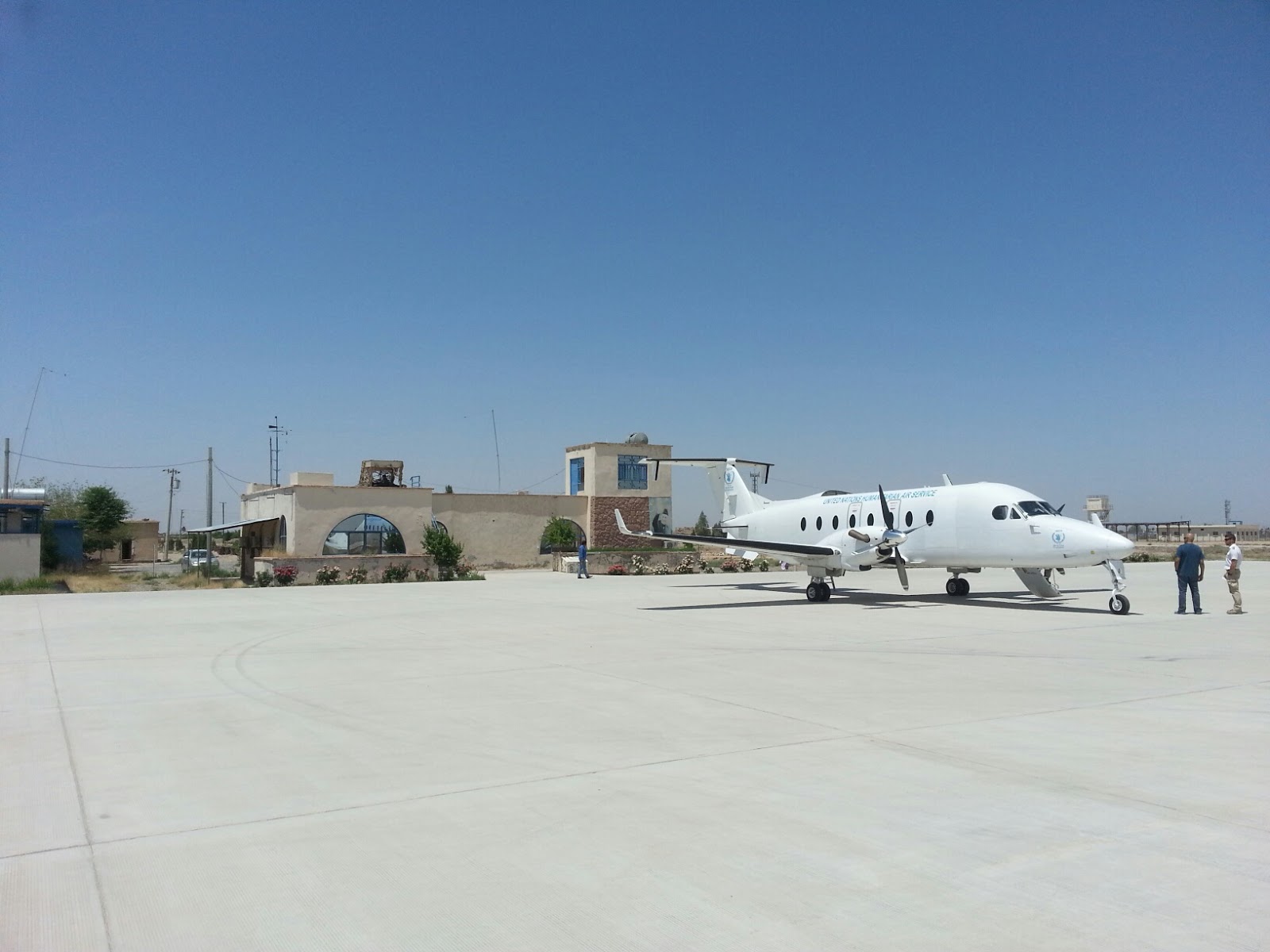 |
| Bost Airport - Lashkar Gah upgraded by USAID in 2008 & probably now the only remaining functional airstrip in Helmand Province. In 2014 it was a tenuous lifeline to infrequent return UN flights to Kabul |
 |
| A downstream view of the Kajaki Dam - it's conceivable that more has been sacrificed for this key installation than any other in recent times Pic David Goldman AP |
Sangin, a former Taliban stronghold central to the extremist group’s opium trade, was the scene of fierce fighting during the Afghan campaign, with more than 100 British troops dying in and around the town between 2006 and 2010. In a December 2, 2016 press briefing, General Nicholson reported the ANDSF repelled eight Taliban attempts to seize key cities during 2016—three times in Kunduz; twice in Lashkar Gar, Helmand; twice in Tarin Kowt, Uruzgan; and Farah City. On October 6, 2016 the ANDSF held steadfast against four simultaneous attacks on different cities. More than 2,000 members of the Afghan security forces were killed fighting in Helmand in 2016 and there are reports of a large number of soldiers and police deserting their posts. Insurgency efforts generally ebb and flow according to a timeless timetable - once determined by seasonal offensives (especially spring and summer) but now thrown awry by changing weather patterns, bravado and the whims of regional commanders. However, there is an age old argument in Afghanistan that there is one key element that any insurgency - especially the Taliban has at it's disposal and that is TIME.
 |
| The launch of the UNDP Helmand Provincial office in 2014 |
It’s against this backdrop that ‘two expendable Aussies’ found themselves at the centre of this pioneering Civ-Mil transition and UN Afghanistan Regionalization Strategy – displaced to the ‘Badlands’ of southern Afghanistan. Ironically, they were ‘hosted’ in the secured Governor’s compound - the legacy of a previous US-Afghan misadventure often referred to as Little America. The fascinating account of the Helmand River Valley Irrigation Scheme (1948 – 1978) is captured in Rajiv Chandrasekaran’s book entitled Little America: The War within the War for Afghanistan. Implemented primarily by the Helmand Valley Authority, the collaborative effort between US-Afghan Governments entailed utilization of American engineering and construction expertise to bring the Helmand region and greater southern Afghanistan irrigation, hydroelectric power and modern roads to transport its latent agricultural potential to markets. Incorporating the construction of the Kajaki Dam and an elaborate irrigation canal network, the entire intervention followed 'classic development' approaches until rudely interrupted by the Soviet invasion in 1979.
 |
| A legacy of Little America - the Helmand River Valley Authority currently part of the Governor's compound with original country club - recreational facilities in a state of disrepair |
 |
| A sanger - ANA observation post on the banks of the Helmand River guarding the approaches to the Governor's compound & the town of Lashkar Gah. |
 |
| Larger than life Kevin 007 - UN-Inn Keeper, Helmand Regional Manager and Chief Horticulturalist and Groundskeeper |
 |
| A portrait of character and commitment - key members of staff |
 |
| The former Helmand Provincial Governor Naeem Baloch, colourful and controversial, flanked by the 'two expendables.' The picture background proves to be equally revealing. |
 |
| The Blogger and Rafeeque who later replaced Kevin as the UNDP Regional Manager: Helmand (lower left) entertaining VIPs at the UN-Inn |
 |
| All in the UN Agency Family - Laurance from WHO enjoys UNDP Afghanistan hospitality at the Lashkar Gah UN Inn. |
 |
| The UNDP Helmand Provincial Team at their work stations - UN Inn - Governor's compound Lashkar Gah |
 |
| Yet another US-Afghan 'Little America' legacy - the immaculate gardens adjoining the Governor's guesthouse and home overlooking the Helmand River |
 |
| General layout of our compound - the main building left was a traditional Helmandi house & containerized accommodation was provided for our Ghurkha protection force & local Afghan staff |
Throughout our assignment, staff security considerations were key to UNDP Kabul and Kevin had at his disposal a respectable dozen or more personnel consisting of a specifically contracted and specialized Ghurkha force protection unit and our own UNDP national security advisors and drivers. Local Afghan National Police secured our immediate compound gate and perimeter and in spite of occasional security incidents in the town, we were 'reassured' by senior provincial government counterparts that the Governor's compound was strictly 'off limits' as a strategic target, protected by a seemingly 'unwritten truce' and or 'invisible' hand. This was rather bizarre as it was common practice, by the Taliban insurgency country-wide, to target government installations especially the seats of provincial/district power. Since the bulk of our Afghan staff were 'imported', due to transfers or project staff realignments, from Kabul and Mazar this posed a direct personal threat to them. The likelihood that local townsfolk would immediately identify them as outsiders was considered relatively high. As a matter of necessity 'imports' were housed in our compound and only occasionally ventured out to mix freely with the local populace. Our handful of local Helmandi staff also kept a low profile, often working from the safety of their homes and constantly changing their pattern of work visits to the Governor's compound.
 |
| A rare outing to the range with our Ghurkha, Afghan National Police and Army protection units |
A unique feature of these imposed security arrangements is that as an office of diverse UNDP colleagues we soon became a very close and cohesive team. As expatriate staff Kevin and I were 'immersed' in a 'total Afghan' - specifically Helmandi cultural experience. As a 'captive collective,' work and leisure time blurred seamlessly into one where we all lived the 'local reality' without exception. Our welfare and lives were in the hands of our Afghan colleagues, friends and hosts. Fuelled by an endless cocktail of nicotine and caffeine Kevin kept everything and one in check including esteemed Governor Naeem Baloch. With the 'fruitful era of development assistance' (and all associated material benefits) rapidly on the wane, our Governor was eager to eke out any last support for his office and provincial administration.
Sadly,Kevin moved on after several months and was replaced by Rafeeque seconded from the UNDP Nepal office. Rafeeque was a devote Muslim and a very able and capable replacement - operations hardly skipped a beat. Kevin's departure changed the team dynamic considerably as the team had warmed to his 'no worries mate' - roguish Aussie approach. I missed the copious amounts of excellent 'free' coffee occasionally accompanied by an equally excellent French cognac. Kevin had a way with words and staff that was certainly missed!
 |
| Rafeeque (top end of the pic in white) leading one of our countless meal times together which was my personal highlight of the day. The fellowship and camaraderie was exceptional and unsurpassed. |
 |
| A fusion of Afghan-Nepalese cuisine prepared by Commander Rana and his men - special moments and memories |
- The sheer contrast between urban Kabul city and rural Lashkar Gah town dwelling specifically air quality and noise pollution;
- Incredible and unfathomable peace and solitude experienced yet even in the wild and very dangerous southern Afghanistan;
- An acute awareness of the incredible sacrifices made by so many - past, present and future
- Helmand's moderate and more liveable climate;
- Summer fruits - the world's best pomegranates;
- Communal living and the sheer pleasure of experiencing true Afghan friendship and hospitality;
- Cultural appreciation and absolute admiration - for the people of both Afghanistan and Nepal;
 |
| Nights were often slow and very long especially when away from home and the simplest pleasures shared within the context of our 'local reality' built incredible friendship bonds |
A lesser known fact related to Helmand Province - specifically Lashkar Gah and Bost is the immense historical and archaeological significance of the area. This growing awareness and concerns around degradation or complete destruction of national or potentially World Heritage Sites of Archaeological Significance culminated in the Lashkari Bazaar Cultural Exhibition Initiative (LBCEI). Conceived in collaboration with colleagues from UNESCO and the French Embassy and Cultural Institute (DAFA), the overriding philosophy behind the initiative was to create a climate of hope and rejuvenation as well as position and put the Province of Helmand and the country generally, back on the international map for lesser known, more hierarchical and aspirational reasons of education, science and culture. The intention was to partner closely with both the national Government of the Islamic Republic of Afghanistan (GoIRA) and the Helmand Provincial Government on the initiative.
At the centre-piece of purportedly the greatest Empire in the East, the original city of Bost was first occupied by Muslim conquerors around 661 A.D. and went on to prosper as the winter capital of the ruling Ghaznavids from the 11th to mid-12th Century. The city was burned and looted in 1151 by the Ghorids and then completely demolished by Genghis Khan in 1220. By the late 16th Century the city and the region was governed by the Safavid dynasty. It became part of the Afghan Hotaki Empire in 1709. It was invaded by the Afsharid forces in 1738 on their way to Kandahar. By 1747 it became part of the Durrani Empire or modern Afghanistan. The British arrived in or about 1840 during the First Anglo-Afghan War but left a year later in disarray. The city was used by Ayub Khan in the Second Anglo-Afghan War until 1880 when the British helped to return it to Abdur Rahman Khan. It remained peaceful for the next 100 years. The ruins of the Ghaznavid palaces, gardens, mansions and bazaar still stand along the Helmand River, even though the city of Bost and its outlying communities were torched in successive centuries by the Ghorids, Mongols and Timurids respectively.
 |
| The Arch of Bust - on record the best preserved Ghurid-era archaeological remnant dating back to the 12th century south of the inner moat of the Citadel of Bust - Helmand Province |
Unfortunately, the initiative did not proceed beyond conceptualization but the remnants of the Lashkari Bazaar remain, facing increasing deterioration and destruction especially from ongoing scouring and erosion of the river banks and in recent years, actual occupation of the archaeological ruins by Helmandi's displaced by fighting between the ANDSF and Taliban in the outlying districts.
In the broader context of a modern Afghanistan grappling with innumerable challenges this appears to be a rather superfluous and extravagant initiative but it does connect the present with Afghanistan's incredibly rich past - a truly Afghan legacy well worth celebrating in it's own right!
During my privileged assignment characterized by a precipitous learning curve; countless WOW experiences and insights and fiercely intense working relationships I was also able to track - chronologically and developmentally - the passage of recent Afghan history through the Little America initiative in Helmand Province (approximately 1948 to 2017). I sat in on US Army Corps of Engineers briefings where the task and burden of Kajaki Dam operations and maintenance (O&M) including the installation of the third and final turbine (Unit 2) was finally passed from international to local contractors. The Kajaki Dam chapter is all but closed, with a sequel perhaps waiting in the wings, where full responsibility for the key installation is set to be assumed by Da Afghanistan Breshna Sherkat (DABS) with effect from April 2017.
 |
| Icing on the cake! With a wicked sense of humour our team would often find a reason to celebrate. |
Towards the end of our assignment there was a marked upsurge in security incidents – the leisurely drive through the town to Bost airport now became a gauntlet run; assassination attempts on senior Provincial Government officials especially ANDSF personnel and suicide bombings of key government infrastructure became the norm – especially within the confines of Lashkar Gah. Most of the surrounding countryside was now under Taliban control and they often brought their fight to the town’s outskirts where pitched, small arms fire fights and battles with the Afghan National Police and Army were audible from the Governor’s compound. The ISAF vacuum had simply been filled!
This was and is still, now years later, 'a sobering and surreal reality' to reflect upon. Whereas the rational for our assignment still holds very true - good development and the delivery of programme and project activities/services are best performed directly, in closest proximity to communities and in collaboration with sub-national government entities (provincial/district), the rapidly changing context in Afghanistan put paid to a pioneering, best-intentioned initiative that was so captivating and all consuming at the time.


